The Creative Clan
Client review and sign-off portal
Live.
What the portal is.
Their client opens a board, sees what is waiting on a decision, signs it off, and the work moves to invoicing.
The Creative Clan shoot and edit campaign work, and the portal is where their client sees it. A month at a time, every shoot sits in one of three columns: being shot or edited, waiting on the client to look, or approved and closed. The client opens the review link from the card, decides, and signs off in the same place.
We built it, and it is live. Every screen below is the portal itself, running against its own demo seed rather than a client's live schedule, so the client name, the brands, the campaign titles, the names and the dates on them are invented. The software, the layout and the states are the real thing.
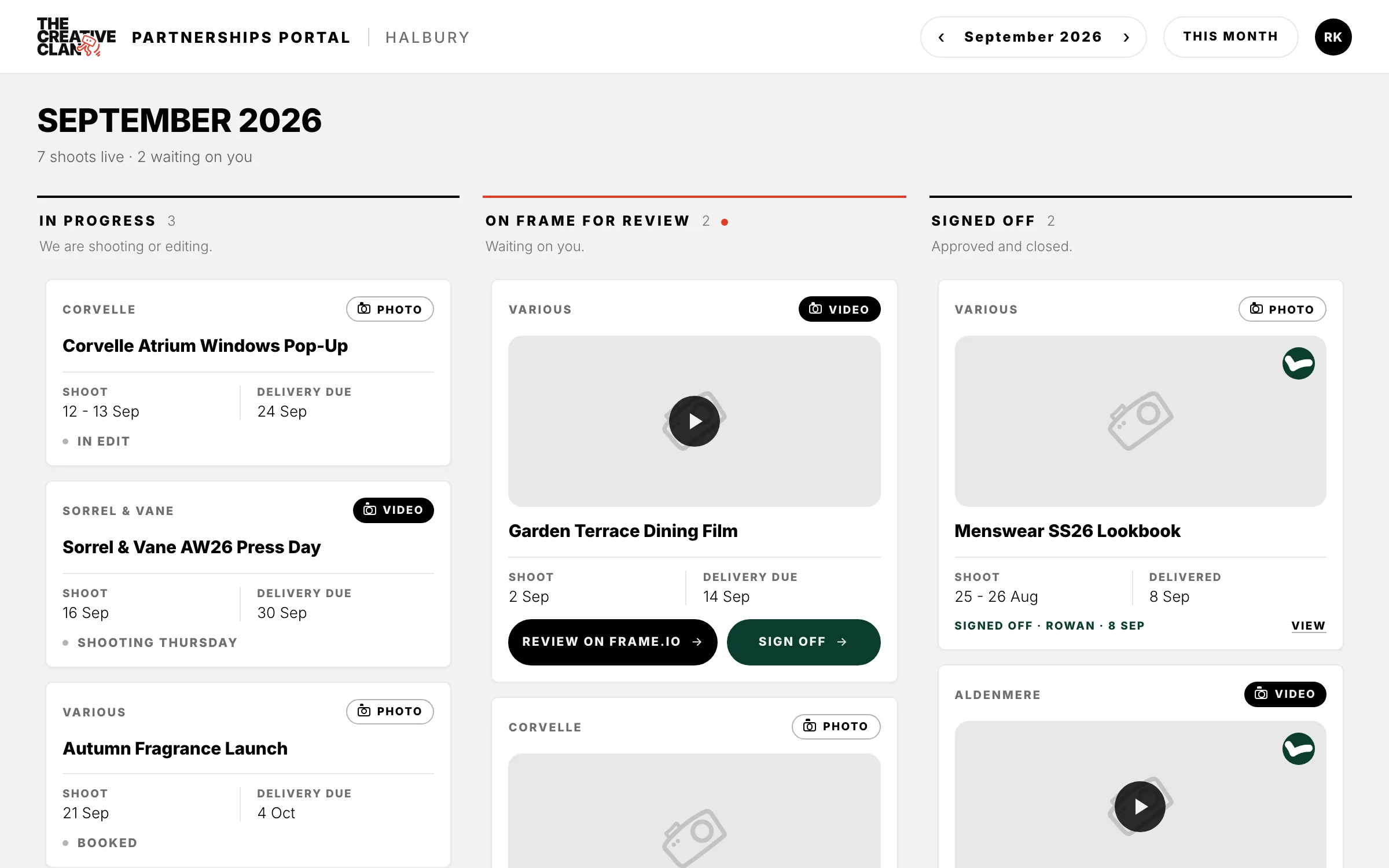
The month, in three columns.
A client opens the portal and sees the month. Every shoot sits in one of three columns, and only the one waiting on them is marked, with a rule, a dot and a count in the line under the month. Each card names the brand, says whether it is photo or video, and carries the shoot dates and the delivery date.
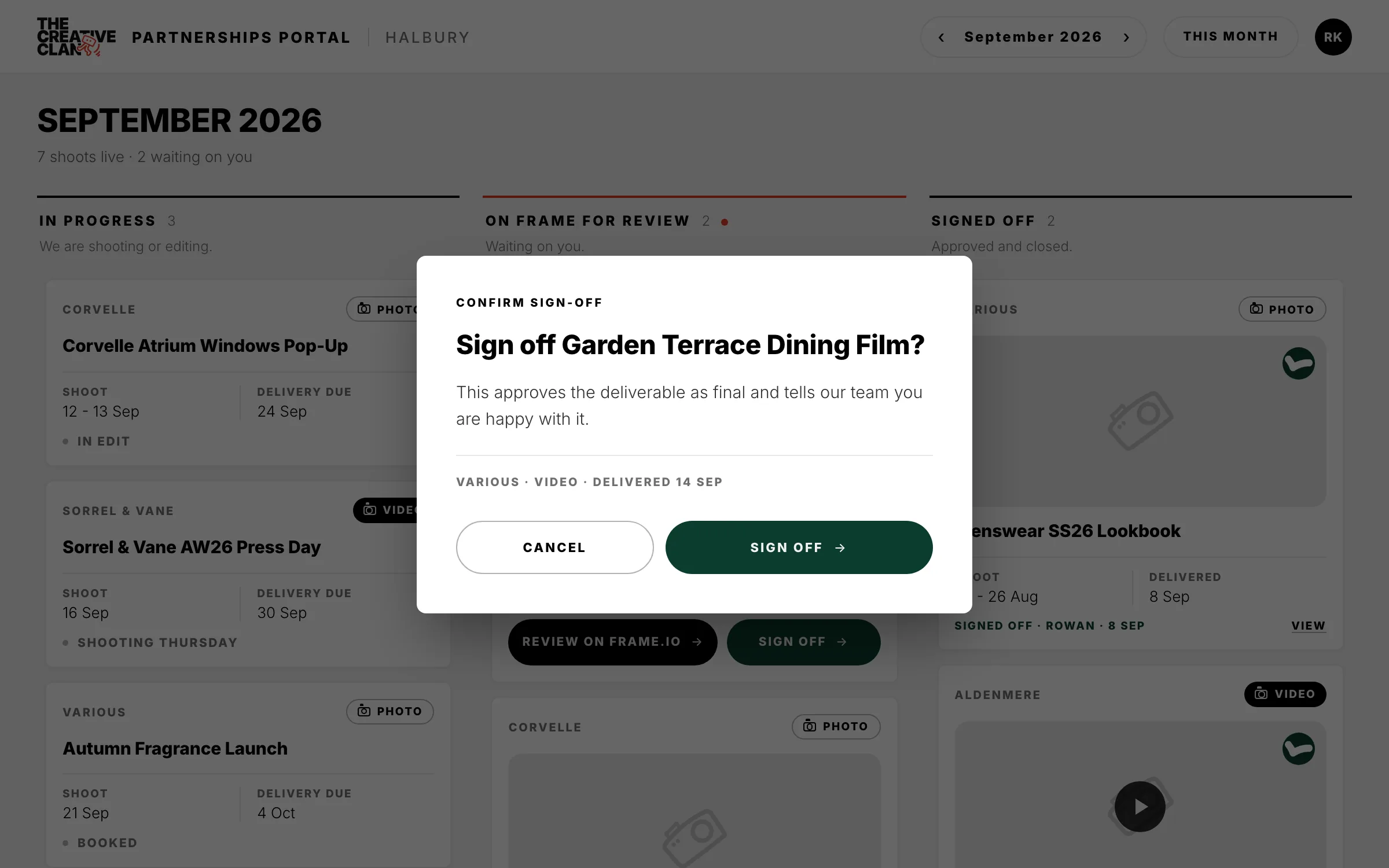
Approval is a decision, not a click.
Sign off sits on the card beside the link out to the review tool. Pressing it opens a confirmation that names the job again and says in words what approving it means, so nobody signs a deliverable off by catching the wrong button.
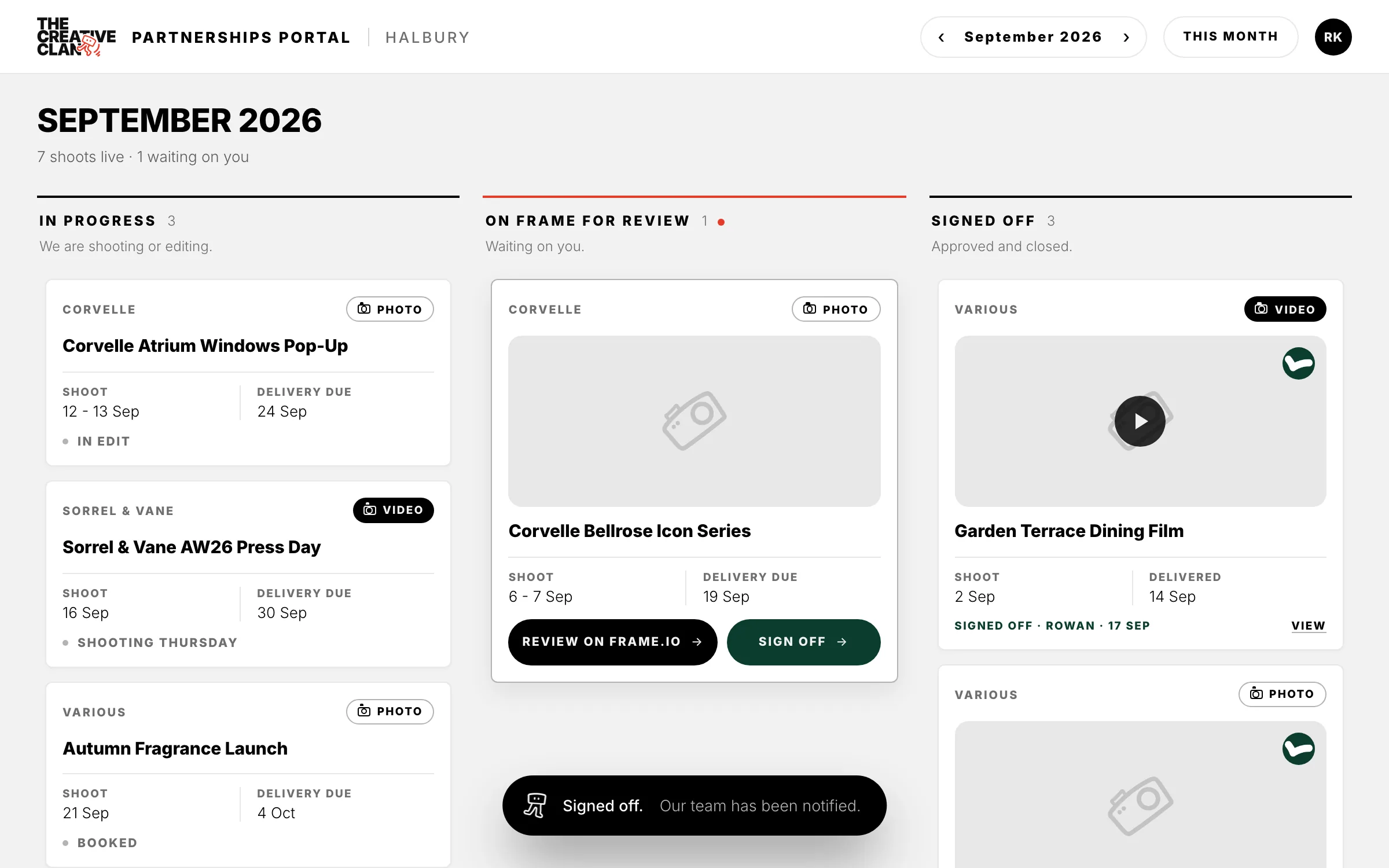
Signed off, and recorded.
The moment a client signs off, the board moves. The job leaves the review column and lands under signed off stamped with the name that approved it and the date, the count of what is waiting drops, and a message confirms the team has been told. This is a real state change, made by clicking through the running portal.
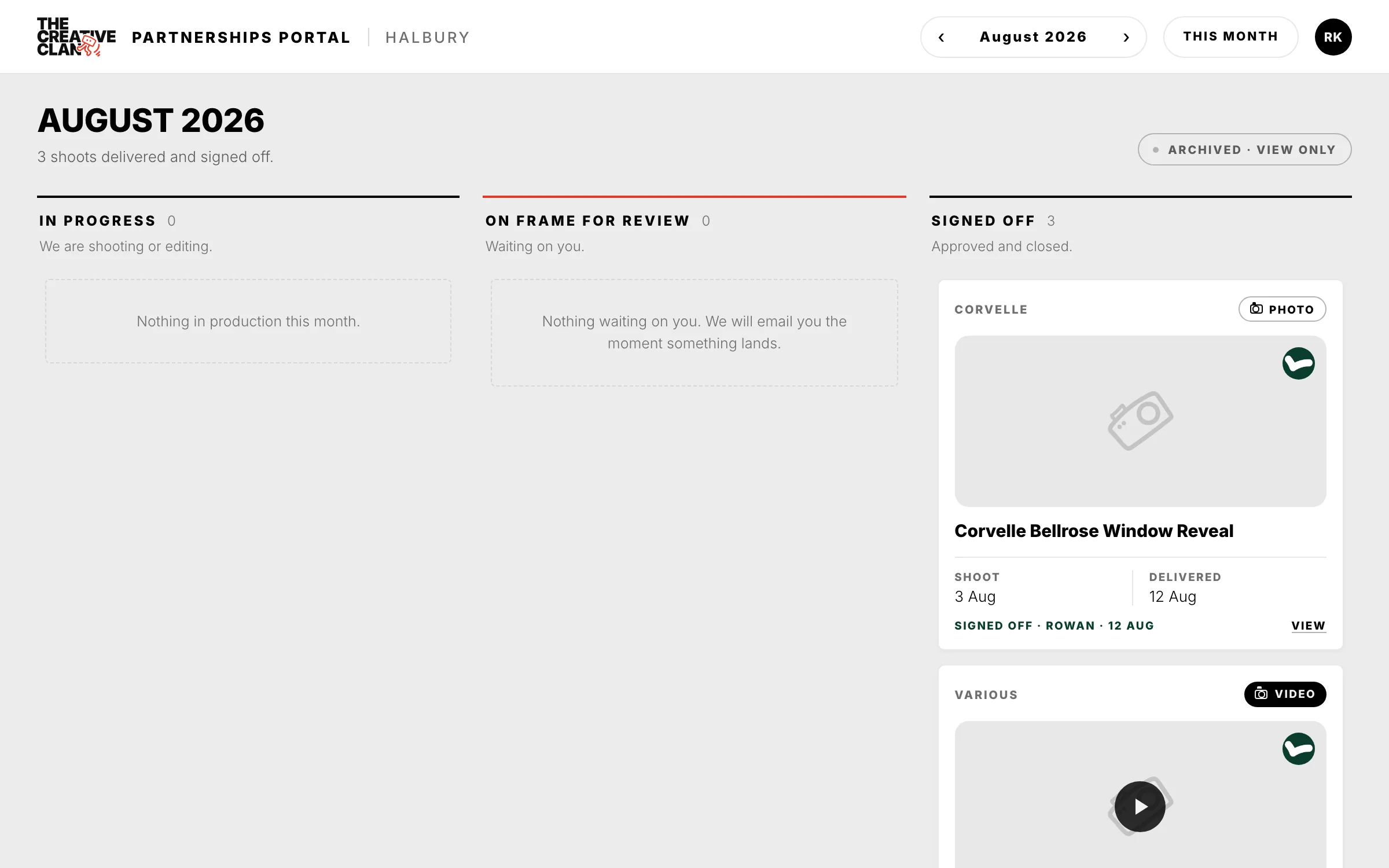
A finished month locks.
Step back a month and the board is marked archived and view only. The two live columns carry wording of their own for having nothing in them, and the signed-off work stays where it is, so the record of what was delivered and approved survives and nothing can be approved twice.
Every portal screen here is the real application running against its own demo seed rather than a client's live schedule, so the client name, the brands, the campaign titles, the names and the dates on them are invented. The sign-in door is the one screen not shown: its wording is written into the code rather than read from data, so it could not be captured neutrally, and we would rather leave a screen out than edit one.
Start with what is slow.
Thirty minutes, no charge, with the people who would build it.
Book a callBring the problem rather than a specification. If it is not work we should take on, we will say so on the call, and there is nothing to prepare.